


How to Remove Plaque From Teeth Naturally and Safely

Have you ever brushed your teeth and still found a sticky film which you could not get rid of? That hardened layer is plaque and when neglected it may silently destroy your teeth and gums. Most individuals think that to remove plaque, they need tough interventions or costly goods, but simple daily routines can be a potent tool. This article examines How to Remove Plaque From Teeth, the science of plaque build-up, and how a simple lifestyle change can be used in the long-term to prevent oral disease.
Knowing What Dental Plaque Is
Dental plaque is a soft and non-colored substance containing bacteria, food particles and saliva proteins. It develops in an unending fashion on teeth particularly in the gum and between teeth. The consumption of sugars and starches causes the plaque bacteria to feed on them and produce acids that make tooth enamel weak. With time, the plaque may be hardened to tartar that cannot be eliminated naturally.
In the general knowledge of dental scientific studies, plaque starts to form some hours after food intake. This is the reason as to why regular oral hygiene is more important than deep cleaning once in awhile. The duration that the plaque remains on the teeth, the more it is harmful causing tooth decay, gum inflammation and bad breath.
The importance of Natural Plaque Removal
Natural plaque control is based on the prevention of the accumulation before it becomes a severe dental problem. There are quite a number of commercial products, which work, yet individuals choose natural products because their gums are sensitive, or because of concern with ingredients or because they are not sustainable in the long term.
Dental professionals, such as the American Dental Association, always underline that oral health is based on the everyday habits. This is supported by natural methods as they do not act against the body. When properly used, they would decrease the bacterial content, harden the enamel and, not to irritate the gums.
The Saliva and its role in the natural control of plaque
One of the strongest natural defenses that the body has on plaque is saliva. It aids in the removal of food particles, the neutralization of acids as well as the delivery of minerals such as calcium and phosphate that reinforce the enamel.
Dry mouth greatly augments the accumulation of plaque. Research has shown that individuals with low salivary flow are very susceptible to gum diseases and cavities. Maintaining hydration and encouraging salival flow by natural actions of chewing is a significant factor in the control of plaque.
Correct Brushing Technique Is More of a Difference than Products
The best natural plaque-removal habit is brushing, though the type of toothpaste is not as important as the technique. Light, sensitive brushing gets rid of plaque prior to its hardening. When one uses small circular movements along the gumline, it will help them remove bacteria in areas where plaque is known to build up the most.
In dental terms, individuals who brush their teeth twice a day and do it properly would be able to save over fifty percent of the amount of plaque as compared to irregular or hurried brushing. The protection of the enamel and gums is not by force but by regularity.
The Effect of Natural Toothpaste Ingredients in Prematurely reducing plaque
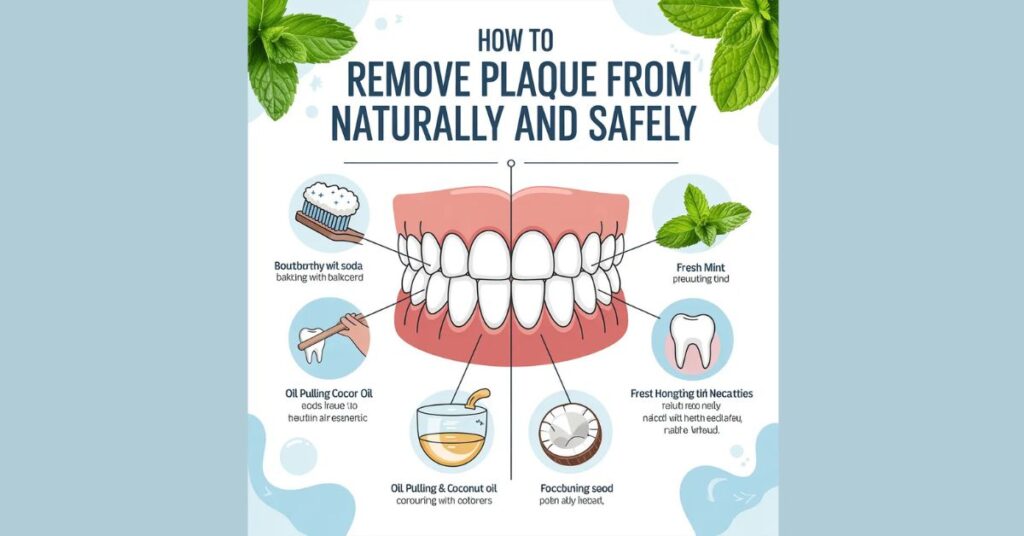
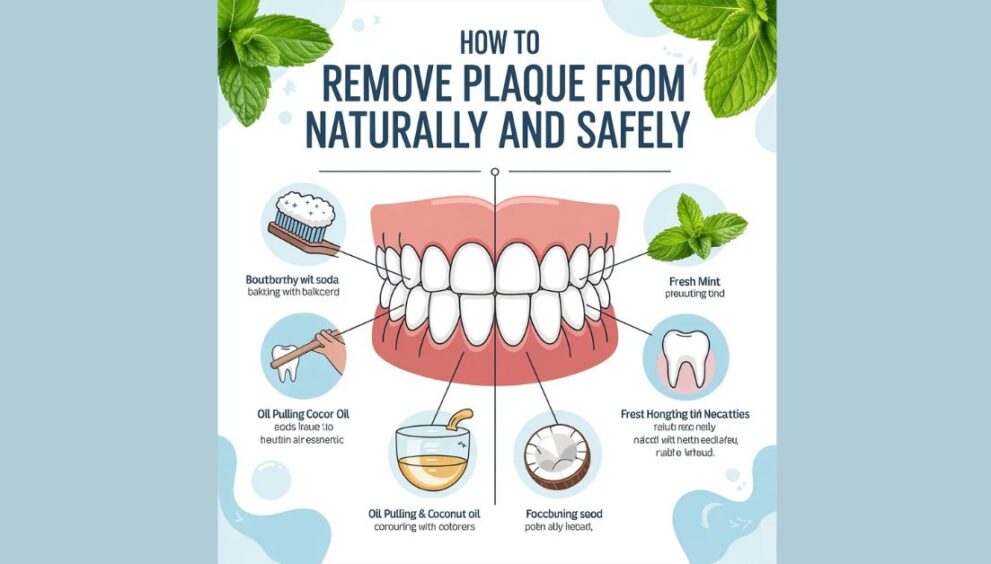
Some of the common natural toothpastes include baking soda, calcium carbonate and herbal extracts. Baking soda is also a little abrasive and this property allows it to break down plaque without damaging enamel. It also neutralizes the acids that are generated by bacteria that make plaque less favorable to form.
Evidence based on clinical findings indicate that toothpastes containing baking soda can greatly reduce plaque levels when taken on a regular basis. This renders them a viable alternative to individuals who want a lighter, yet effective alternative.
The relevance of Inter-teeth Cleaning by nature
Plaque is able to survive in areas that a toothbrush cannot. Although flossing is the gold standard, natural interdental cleaning products also aid in interfering with the accumulation of plaque. Brushing between teeth helps to ensure that plaque does not develop into tartar which causes development of gum disease.
Athletic studies have always indicated that one of the major causes of gingivitis is plaque which is left in between the teeth. The need to treat these concealed places on a daily basis is a great way to improve general mouth health.
The Direct Effects of Diet on the Formation of Plaque
The food you consume is very important in the accumulation of plaque. Refined carbohydrate foods and sugary foods nourish plaque bacteria and increase the rate of acid production. Conversely, fibrous vegetables and fruits promote the production of saliva and facilitate the natural cleaning of the teeth on the chewing actions.
In nutrition, it has been determined that high levels of processed sugars in the diet are directly linked to the amount of plaque and the risk of cavities. Limiting sugar consumption and selecting whole foods would provide an oral environment in which plaque bacteria would not be able to grow.
The Natural Cleaning Action of Crunchy Foods
Fruits and vegetables such as apples, carrots, and celery are crunchy and they serve as natural toothbrushes. Their texture assists in scrubbing off plaque with the saliva which is stimulated by chewing also protecting the enamel.
In spite of the fact that these foods do not substitute the act of brushing, dental researchers concur that they help reduce the level of accumulating plaque in case they are taken on a regular basis as part of the diet. They are not only good to the oral health, but also assist with digestion and general well-being.
Oil Pulling and its contribution to oral health
Oil pulling is an ancient procedure that requires the use of oil to clear the bacteria by swishing the oil in the mouth. The coconut oil is widely used because it has antimicrobial properties. In laboratory research, some oils have been found to decrease the bad oral bacteria which are associated with the formation of plaque.
Although oil pulling is not a substitute of brushing, there are indications that it can be used as a complementary behavior in helping to reduce the plaque and maintaining good health of the gums. It is soft and so can be used by those with sensitive mouths.
Herbal Rinses and their Antibacterial activity
Natural ingredients have been used to provide herbal rinses that serve to aid oral health. There are specific herbs with substances that prevent bacterial growth and the inflammation.
Recent studies affirm the use of herbal mouth rinses to reduce the quantity of plaque and enhance the condition of the gums in case of regular use. These showers provide the natural choice among people who do not want to use alcohol-based products.
The Effect of Gum Health on the Retention of Plaque
Properly gums are tight around the teeth so the accumulation of plaque is difficult. Red or shrinking gums provide spaces in which plaque bacteria propagate. Gum care should thus be a part of natural plaque control.
Clinical evidence implies that the reversibility of early gum inflammation is possible when the oral hygiene and natural anti-inflammatory measures are enhanced. When the gum health is taken care of at an early stage, the complications caused by plaque will not develop.
The Connection Between Plaque and Bad Breath
Plaque bacteria that generate sulfur compounds are usually the cause of bad breath. The removal of plaque has an automatic effect of decreasing these odor-producing materials. Fresh breath can be maintained by regular oral care, hydration and balance in the diet.
Research projects have estimated that over 80 percent of chronic bad breath problems are associated with oral bacteria. This demonstrates the need of taking care of the plaque not only in the dental health but also social confidence.
Why Plaque becomes tartar and Why Time is the key
During long durations in which plaque is deposited on teeth, the material is absorbed by saliva and is hardened into tartar. When this occurs, then natural ways are not successful anymore. They need to be professionally cleaned.
Dental statistics have shown that tartar may start forming between 24 and 72 hours in case the plaque is not washed. This tight window highlights the significance of the daily, regular plaque management.
The influence of Lifestyle Habits on Plaque Builder
Snacking, smoking, and high-level consumption of caffeine heighten the production of the plaque. Such habits change the flow of saliva as well as promote growth of bacteria. The risk of the plaque can be reduced considerably through decreasing these triggers.
There is constant evidence in the public health literature that tobacco use is associated with increased levels of plaque and gum disease. The changes in the lifestyles are thus a significant aspect of natural prevention of plaque.
In Case of Insufficiency of Natural Methods
Natural clearing of the plaque is effective in prevention and early accumulation, but it is limited. The difficult tartar and gum disease that has advanced to the point of being professional is to be treated. Neglecting such symptoms may result in loss of stress and health complications.
According to dentists, daily habits and strong daily habits, coupled with routine professional cleanings, have the most successful results in the long run. Natural techniques are best used in prevention strategy and not in a treatment of an advanced case.
Long-term Natural Plaque Control Advantages
Regular natural plaque care results in a healthier and stronger enamel, healthy gums, fresher breath and less frequent visits to the dentist. In the long run, it also prevents the danger of cavities and periodontal disease.
There is epidemiological evidence to indicate that individuals with good daily oral hygiene procedures have greatly reduced lifetime dental treatment expenditures. The most cost effective and sustainable would be prevention.
Conclusion
Plaque removal of teeth without using any pharmaceutical is not a fast solution or a fashionable cure. It is concerning the way plaque develops and the daily routines to manage it before it happens. The accumulation of plaque can be greatly decreased by proper brushing, nutritious diet, stimulation of saliva and regular practices by anyone. Natural procedures enable one to have the ability to control his/her oral hygiene and is in accord with the body.