








The Future of Document Verification: From OCR to AI and Biometrics

The process of document verification has been transformed in a radical way over the last ten years. What used to be a process that is intensely dependent on manual verification and simple visual inspection has become a technology-sensitive and advanced procedure. With the digital onboarding experience becoming a standard in banking, fintech, insurance, crypto, and SaaS solutions, the desire to perform document validation faster, more precisely and securely has increased. The future of document verification is in the uninterrupted integration of the optical character recognition, artificial intelligence, and biometrics technologies that would provide a more robust protection against fraud and enhance user experience.
The Early Verification of Documents with the help of OCR
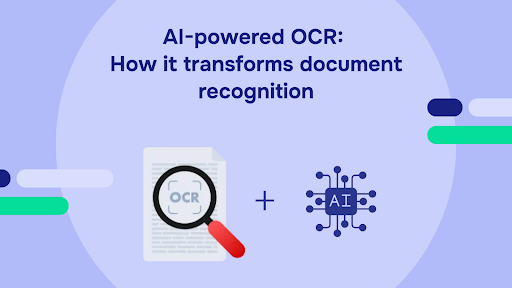
One of the early technological advancements in document verification was the technological method of verifying documents by recognizing characters through optical means. OCR systems could retrieve the text in the scanned or photographed documents and transform it into machine-readable data. Such automation has saved a lot of time in data entry, processing time, and human error. OCR enabled companies to scan through identity documents to get names, document numbers, date of birth and expiration dates with the help of digital recognition which formed the basis of the digital verification process.
The conventional systems of OCR-based systems were, however, limited. They had the problem of image quality, diverse document format, different languages and sophisticated forgeries. OCR was able to extract text, but not to provide good judgement of a genuine or a manipulated document. These issues raised the necessity to have more sophisticated technologies that are able to comprehend the situation, identify anomalies and adjust to the changing methods of fraud.
Switching OCR to AI-Assisted Document Verification
Artificial intelligence has completely altered the process of document verification. The AI-driven systems do not just extract the text but consider the whole structure, layout, and visual characteristics of the document. Machine learning models are trained with large amounts of legitimate and fraudulent documents and could be able to detect the small discrepancies that might have gone unnoticed by the traditional OCR systems. These are font anomalies, spacing anomalies, inappropriate data fields, and anomalous image patterns.
Document verifying systems based on AI are constantly updated with new information. These systems evolve as fraudsters come up with sophisticated methods, therefore identifying new patterns and risk factors. This active ability renders AI much better than the passive rule-based verification approaches. The fact that the analysis now is less about OCR-based strategies but rather about AI-based analysis is a significant advancement towards gaining more accurate and scalable document verification.
State-of-the-art Authenticity checks and Fraud detection
Among the greatest innovations in document verification, the opportunity to confirm document authenticity on the new plane is to be mentioned. Embedded security features that are analyzed by modern systems are holograms, watermarks, machine-readable zones, and microtext. Image forensics methods identify evidence of manipulation, including layerings or pixel anomalies or computer manipulations. To a great extent, AI models can determine whether these features correspond to the requirements of the issuing authorities and minimize the acceptance of counterfeit or falsified documents.
Fraud detection is also being undertaken more actively. Advanced document verification systems are used to detect high-risk submissions at onboarding as opposed to having to react to fraud when it has already taken place. This early warning helps to avoid the creation of fraudulent accounts and saves businesses the costs of losing their money, financial exposure, and reputation.
Emergence of Biometric Authentication in Identity Check
Biometric verification is the next big jump in document verification in the future. Documents confirm identity information whereas biometrics confirm the person presenting the document. To enhance identity assurance, facial recognition, liveness detection, and other biometric methods are being used more and more with document checks. This multi- staggered solution is necessary to make sure a real individual is available and the document is theirs.
Biometric verification would be especially helpful in fighting impersonation and synthetic identity fraud. Businesses will greatly minimize the threat of stolen or reused documents by comparing a live facial scan to the photo on an identity document. Another application of liveness detection is to ensure greater security by ensuring the biometric sample is scanned and not an image or deep fake.
Smart Automation to Enhance User Experience
The future of document verification is not only one of improved security but also one of improved user experience. The customers are looking at quick and hassle-free onboarding services, particularly amidst the competitive digital markets. Document inspection with the help of AI allows making the decisions nearly instantly and saves minutes to seconds. The automated image quality checks help the user to submit clear images of documents and reduce rejections and resubmissions.
With an increasingly intelligent system, verification procedures will go on without much human intervention. This trade off security and convenience is crucial to customer retention, conversion rates and the general brand trust.
International Scalability and Cross International Checking
With increased internationalization of businesses. There is a need to have document verification systems that can accommodate numerous identity documents that have been issued by various countries. The future of document verification is based on more extensive global coverage, language recognition and alignment of regional compliance. The universal template of AI models is trained on various document templates, thus allowing companies to onboard international customers safely without the need to develop region-specific manual operations.
Fintech platforms, online marketplaces, and crypto exchanges that deal on an international scale have particular significance regarding this global scalability. Strong document checking enables such organizations to scale up with the level of confidence and ensures uniform security levels.
Privacy of Data and Ethics
As AI and biometrics are more frequently used, data privacy and ethical aspects are playing a primary role in the strategies of document verification. Companies should make sure that the personal data should be managed in a responsible manner, stored safely, and processed in accordance with the data protection laws. As verification technologies develop, transparency, consent, and data reduction will become highly significant in keeping the user trust.
It is likely that in the future more privacy-preserving technologies will be considered, including encrypted biometric templates and decentralized identity models. Which do not involve the necessity to store data centrally.
Conclusion: A Better, Safer Future
The intelligent, adaptive, and layered technologies characterize the future of document verification. The emergence of AI and biometrics compared to OCR is a sign of increased complexity in identity fraud and more robust online trust systems. With enhanced document verification and biometric verification, businesses are able to gain greater accuracy, better compliance and customer experience.
With the ever-growing digital ecosystems, document verification will be part of safe onboarding and risk management. Companies that are ready to adopt these changing technologies will be in a better position to secure their platforms, generate confidence and grow safely in a more digital world.