









Manufacturing Process of Tapered Bearings

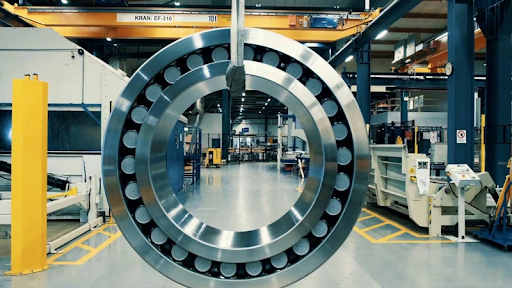
From Design to Delivery: Inside the Manufacturing Process of Tapered Bearings
In cases where heavy-duty machines are operated, reliability is not a mere option it is the very basis of the performance. Tapered bearings, without exception, are widely used in various activities such as automotive, railways, agriculture, mining, and industrial equipment manufacturing to support both axial and radial loads accurately. If you get an inkling or have the knowledge about the design, the engineering, and the delivery process of these bearings, you will not hesitate to make a judgment about the proper tapered bearing manufacturer that will meet your requirements. The entire process of designing and making the bearings has been documented in a guide that you will receive with a trip from conception through to dispatch passing by testing and machining. The successful creation of a tapered bearing with the ability to endure even the most unfavorable conditions in terms of load and speed has been revealed.
What Are Tapered Roller Bearings & Why Are They Vital?
Tapered roller bearings are notably shaped in such a way that they can deal with heavy loads combined with both slips and radial movement at the same time being very productive. Their configuration provides consistent rotation, less friction, likely the longest life possible, and easy disassembly under various operating conditions.
- Typical Applications for Tapered Bearings
- Commercial vehicles & passenger cars
- Gearboxes, axles & transmission lines
- Mining & construction machinery
- Steel mills & heavy industrial rigs
- Farm equipment & rolling stock (railways)
These bearings are crucial in the processes of controlling and maintaining alignment, stability, safety of operation, and longevity of the equipment—hence precision manufacturing being a requirement.
Step-by-Step Manufacturing Process of Tapered Bearings
Knowing every step of the procedure allows you to measure the quality standards of a tapered bearing manufacturer and guarantees that you pick the one that is most compatible with your machinery objectives.
1. Design, Engineering & Load Simulation
A very precise bearing is always the result of engineering analysis which is based on the loads and conditions of the application.
The most important design factors considered
- Load capacity in both axial and radial directions
- Optimization of the contact angle
- Determining the speed
- Choosing the material
- Lubrication parameters
- Calculating the lifetime of the product
The geometry, roller alignment, stress concentration, and temperature effects are all evaluated through the use of advanced CAD/CAM software and finite-element simulation. During this process, the bearing is tested to see whether it can perform within the real-world conditions.
2. Material Selection & Steel Quality Inspection
Selecting the right steel is of key significance as it has a concise impact on hardness, fatigue strength, and heat resistance.
Common materials used
| Material Type | Properties | Common Use |
| AISI52100 chromium steel | High wear & fatigue strength | Automotive & industrial |
| Bearing-Grade Alloy Steel | High durability under shock loads | Railways, mining |
| Case-Carburized Steel | High surface hardness | Heavy load applications |
Each lot of steel is subject to the following inspections:
- Chemical analysis
- Grain structure
- Content of inclusions
- Cleanliness examination
3. Forging & Rough Shaping
The steel is subjected to high temperatures and molded into primary rings with the purpose of increasing the density and keeping the structure firm. This action makes the material stronger and allows it to be used for precision machining.
Advantages of forging
- Internal material defects are eliminated
- Tensile strength is improved
- Long-term performance stability becomes enhanced
4. CNC Turning & Precision Machining
The CNC machines are used to make the forged rings very precisely in order to obtain the required dimensions for the raceways, cages, and roller components. Information from the robotic machining operations makes it possible to control the dimensional tolerance with an accuracy of a few microns.
Machining operations conducted
- Turning of outer ring and inner ring
- Grinding of raceway
- Finishing of roller diameter and profile
- Cutting of cage pocket
Automation and robotics assure accuracy and consistency. Leading to the decrease of human-related mistakes.
5. Heat Treatment for Hardness & Wear Resistance
Heat treatment is the sole factor that determines the lifetime of a bearing. The process involves heating and quenching under controlled conditions to harden the parts, which is then followed by tempering.
What to expect from heat treatment
- Improvement of hardness at the surface
- Increase in fatigue life
- Maintenance of dimensional tolerance
- Increase in load-bearing capability
Distortion and cracking are avoided by digitally controlling the temperature and time.
6. Precision Grinding & Super-Finishing
Raceways and roller surfaces are ground with the help of the latest CNC grinding machines to obtain an extraordinarily fine surface finish. This process cuts down on friction and noise thereby boosting efficiency.
Processes involved
- Grinding of internal & external raceway
- Grinding of rollers with precision
- Super-finishing for glossy smoothness
Surface roughness (Ra) is reduced to below 0.1 µm for the best performance.
7. Assembly of Bearing Components
The parts of the bearing are thoroughly cleaned after grinding and finishing, and then assembled in dust-free environments.
- Joined components
- Inner and outer rings
- Tapered rollers
- Cage assembly
- Seals or shields (if necessary)
Each roller is accurately placed with consistent spacing to ensure even load distribution.
8. Final Testing & Quality Inspection
All bearings are subjected to strict testing to confirm their exact performance before being shipped out.
Quality checks consist of
- Dimensional & tolerance measurement
- Vibration & noise inspection
- Dynamic & static load testing
- Lubrication and temperature performance
- Visual & surface defect inspection
Only components that conform to global industry standards are allowed to proceed to packing and shipping
9. Promotion & Delivery
The anti-rust oil shields bearings from corrosion and wear while being packed and stored in sealed moisture-proof cans.
Factors in Delivery
- Special packaging for transportation over long distances
- Labeling with serial numbers and information flow
- Documents & compliance certificates
What Makes a Reliable Tapered Bearing Manufacturer?
Precision-engineered tapered bearings are the main concerns while selecting the manufacturing partner.
| Evaluation Factor | Why It Matters |
| In-house forging & machining | Better control on quality, faster delivery |
| Advanced CNC & robotic systems | Higher accuracy & consistency |
| Global quality standards | ISO/TS certifications ensure reliability |
| Custom design support | Tailored solutions for unique machinery |
| Strong testing capabilities | Assured performance & long bearing life |
| Transparent technical consultation | Better fit & smarter purchasing |
Advantage of Choosing Precision-Engineered Tapered Bearings
- Longer life span at nearly no maintenance
- Lower friction which means better fuel & energy efficiency
- Operation that is both smooth and silent
- Superb load-carrying capacity
- Less production stoppage and loss of productivity
- Improvement in safety and stability of operations
How to Choose the Right Tapered Bearing Manufacturer for Your Machinery
The selection of the right tapered bearing manufacturer could result in the operational efficiency, reliability, and cost savings of the machinery being changed drastically. Here are some pointers to help you with your decision:
1. Check Manufacturing Capabilities
- In-house forging, machining, and assembly
- High-precision through advanced CNC and robotic systems
2. Verify Quality Standards
- ISO/TS or similar certifications
- Testing for durability, noise, and vibration under very strict quality control
3. Evaluate Technical Support
- Help in designing a bearing to customer specifications
- Advice on load, speed, and lubrication
Expert Tips to Choose the Best Tapered Bearing Manufacturer
1. Inspect Material crediting & Quality
- High-quality steel (such as AISI 52100 or bearing-grade alloy steel) is an essential.
- Manufacturers must supply material certificates and batch monitorability.
- Top quality materials enhance wear resistance, fatigue strength and bearing life
2. Cost vs Value Analysis
- Keep your eyes on value rather than price, good bearings reduce the number of replacements and also avoid costly downtimes.
- Choosing a premium tapered bearing maker is a long-term investment that pays off in better performance, longer life, and no worries.
Conclusion
The whole manufacturing process from raw material selection and precision machining through quality testing and dispatch finally leads to the performance of tapered bearings. So, if you go with the right tapered bearing manufacturer, you will have the benefit of reliability, durability, and efficiency which will make sure your machines run smoothly even under the toughest conditions. The application of engineering-driven bearings is an investment that will pay off in lower maintenance costs in the long run, better operational lifespan, and higher productivity.
FAQs
1. The major factors controlling the durability of tapered bearings are
the operating conditions, the quality of grease. The material/ grade, and the maintenance schedule.
2. Is it possible to manufacture a tapered roller bearing with a non-standard design?
Yes. The producers are able to change the size, coop material, roller angles and heat-treatment variables according to the application.
3. What factors can help you determine if a tapered bearing manufacturer is trustworthy?
The maker’s machining abilities, quality verifications, testing tools, technical knowledge and client support should be your main ideas.
4. Which sectors are most qualified on the use of tapered roller bearings?
The sectors of the above one are self-propelling, railway, tunneling, construction, agriculture and heavy industrial machinery. These are the sectors that have a high dependence on the use of tapered roller bearings.
5. Tapered bearings need to be checked how often?
Inspection intervals are based on speed and load conditions, but regular maintenance will keep the performance at a good level and failure will be avoided.