







Azure Cloud Services in UAE: A Complete Guide for Modern Businesses

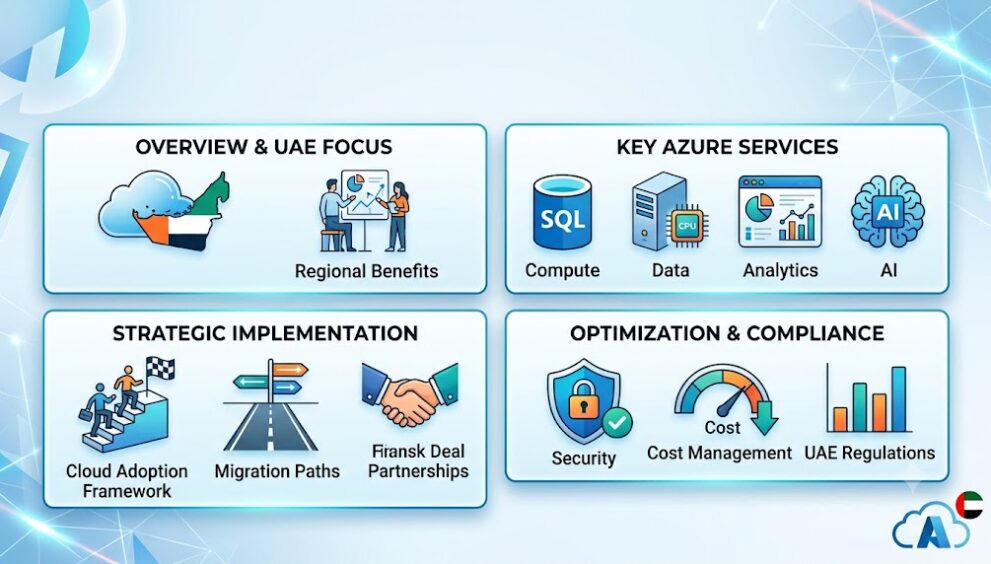
Cloud computing has become an essential part of modern business operations, enabling organizations to improve efficiency, strengthen security, and support long-term growth. As digital transformation continues across the region, many organizations are adopting Azure cloud services in UAE to modernize their IT infrastructure while meeting operational and regulatory requirements.
Microsoft Azure provides a comprehensive cloud platform that supports computing, networking, storage, databases, artificial intelligence, analytics, and application development. Businesses in the UAE use Azure to host applications, protect business data, improve collaboration, and build scalable digital environments that adapt to changing operational needs.
Organizations also integrate Azure with Microsoft Enterprise Solutions to create a connected ecosystem for identity management, productivity, cybersecurity, and business applications.
Why Azure Cloud Adoption Is Growing in the UAE
Businesses across industries are moving workloads from traditional on-premises infrastructure to cloud environments. This shift provides greater flexibility, supports remote operations, and simplifies IT management.
Several factors contribute to the increasing adoption of Azure cloud services in UAE:
- Expanding digital transformation initiatives
- Demand for scalable IT infrastructure
- Improved cybersecurity capabilities
- Support for hybrid work environments
- Business continuity planning
- Regulatory and compliance requirements
- Faster application deployment
- Advanced analytics and artificial intelligence capabilities
Azure offers a cloud platform that accommodates organizations ranging from startups to large enterprises.
What Are Azure Cloud Services?
Azure Cloud Services refer to Microsoft’s collection of cloud-based technologies that allow businesses to build, deploy, manage, and scale applications through Microsoft’s global cloud infrastructure.
These services support nearly every aspect of modern IT operations, including:
- Virtual machines
- Cloud storage
- Networking
- Databases
- Identity management
- Application hosting
- Artificial intelligence
- Security management
- Backup and disaster recovery
- Data analytics
Organizations can select only the services they require while expanding resources as business demands increase.
Core Azure Cloud Services Available in UAE
Azure Virtual Machines
Azure Virtual Machines provide scalable computing resources without requiring organizations to purchase and maintain physical servers.
Businesses use virtual machines for:
- Business applications
- Development environments
- Legacy software
- Testing platforms
- Remote desktop services
Resources can be adjusted based on workload requirements.
Azure Storage
Data storage remains one of the most important components of any cloud environment.
Azure Storage supports:
- Files
- Documents
- Images
- Videos
- Database backups
- Application data
- Long-term archives
Built-in redundancy helps improve data availability and resilience.
Azure Networking
Azure provides networking services that securely connect applications, users, offices, and cloud resources.
Networking capabilities include:
- Virtual networks
- Load balancing
- VPN connectivity
- Private networking
- Traffic management
- Secure remote access
These services support communication between cloud and on-premises environments.
Azure Active Directory
Identity management plays an important role in protecting business systems.
Azure Active Directory enables organizations to manage:
- Employee identities
- User authentication
- Access permissions
- Single sign-on
- Multi-factor authentication
- Conditional access
Centralized identity management improves both security and administrative efficiency.
Security Features of Azure Cloud Services in UAE
Cybersecurity remains a priority for organizations operating in cloud environments.
Azure includes multiple security technologies that help protect business information from unauthorized access and cyber threats.
Key security capabilities include:
Identity Protection
Organizations can secure user accounts using:
- Multi-factor authentication
- Password policies
- Conditional access
- Risk-based authentication
- Identity monitoring
These controls reduce the likelihood of compromised accounts.
Threat Detection
Azure continuously monitors cloud resources for unusual activity.
Security monitoring includes:
- Suspicious sign-in detection
- Malware monitoring
- Network security analysis
- Threat intelligence
- Security alerts
Early detection supports faster incident response.
Data Encryption
Azure encrypts data both during storage and transmission.
Encryption helps protect sensitive business information while supporting compliance requirements across multiple industries.
Scalability for Growing Businesses
Business requirements often change due to seasonal demand, expansion, or new projects.
Azure cloud services in UAE allow organizations to scale resources without replacing existing infrastructure.
Businesses can:
- Increase computing power
- Expand storage
- Deploy additional applications
- Support more users
- Reduce unused resources during lower demand
This flexibility helps organizations respond efficiently to changing workloads.
Hybrid Cloud Capabilities
Many businesses continue operating both on-premises systems and cloud resources.
Azure supports hybrid environments by connecting local infrastructure with cloud services.
Hybrid cloud solutions help organizations:
- Modernize gradually
- Protect existing investments
- Improve disaster recovery
- Support remote employees
- Maintain operational continuity
This approach allows businesses to transition to the cloud at their own pace.
Disaster Recovery and Backup
Unexpected disruptions can affect business operations and access to critical data.
Azure provides backup and disaster recovery services that help organizations restore systems after outages, cyber incidents, or hardware failures.
Backup solutions support:
- Virtual machines
- Databases
- Business applications
- File storage
- Microsoft workloads
Recovery plans help minimize downtime and improve operational resilience.
Supporting Business Continuity
Business continuity involves maintaining operations during unexpected events.
Azure contributes by providing:
- High availability
- Geographic redundancy
- Automated backups
- Disaster recovery planning
- Continuous monitoring
- Infrastructure resilience
These capabilities help organizations reduce service interruptions and improve reliability.
Azure Cloud Services for Different Industries
Azure supports organizations across multiple sectors in the UAE.
Common industries include:
Healthcare
Healthcare providers use Azure for secure patient data management, collaboration, analytics, and application hosting.
Financial Services
Financial institutions use Azure to strengthen cybersecurity, improve regulatory compliance, and manage sensitive financial information.
Retail
Retail businesses leverage Azure for inventory systems, e-commerce platforms, customer analytics, and demand forecasting.
Manufacturing
Manufacturers use Azure to connect production systems, monitor equipment, analyze operational data, and improve efficiency.
Education
Educational institutions use Azure to support virtual learning environments, collaboration platforms, identity management, and secure data storage.
Integrating Azure with Microsoft Enterprise Solutions
Organizations often combine Azure with Microsoft Enterprise Solutions to create an integrated technology ecosystem.
Common integrations include:
- Microsoft 365
- Microsoft Teams
- Microsoft Defender
- Microsoft Entra ID
- Microsoft Intune
- Power BI
- Power Platform
- Dynamics 365
These technologies work together to improve collaboration, security, identity management, business intelligence, and operational efficiency.
Best Practices for Using Azure Cloud Services in UAE
Organizations can improve cloud performance and security by following established management practices.
Recommended practices include:
- Implement multi-factor authentication for all users.
- Monitor cloud resources regularly.
- Review user permissions periodically.
- Encrypt sensitive business data.
- Configure automated backups.
- Apply security updates promptly.
- Optimize cloud resource usage.
- Monitor costs and consumption.
- Develop disaster recovery plans.
- Perform regular security assessments.
Following these practices helps maintain a secure and efficient cloud environment.
Conclusion
Azure cloud services in UAE provide organizations with a flexible cloud platform that supports secure infrastructure, application hosting, identity management, disaster recovery, analytics, and business continuity. The platform enables businesses to scale resources, strengthen cybersecurity, and modernize IT operations while adapting to changing business requirements.
When integrated with Microsoft Enterprise Solutions, Azure creates a connected ecosystem that supports productivity, collaboration, security, and long-term digital transformation across organizations of all sizes.
Frequently Asked Questions
What are Azure cloud services?
Azure cloud services are Microsoft’s cloud computing solutions that provide virtual machines, storage, networking, databases, security, analytics, and application hosting through a global cloud platform.
Why do businesses use Azure cloud services in the UAE?
Businesses use Azure to improve scalability, strengthen security, support hybrid work, simplify infrastructure management, and enhance disaster recovery while meeting operational requirements.
Is Azure suitable for small and large businesses?
Yes. Azure provides flexible cloud resources that can support startups, small businesses, medium-sized organizations, and large enterprises.
Can Azure support hybrid cloud environments?
Yes. Azure integrates on-premises infrastructure with cloud services, allowing organizations to manage both environments through a unified platform.
How does Azure improve business security?
Azure includes identity management, encryption, threat detection, multi-factor authentication, network security, and continuous monitoring to help protect business data and cloud resources.