









How to Create a Real Estate Business Plan

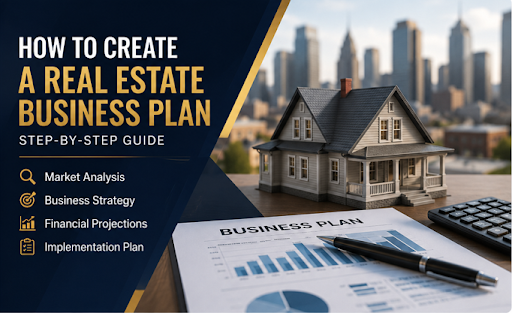
Do not endanger your savings by getting involved in the real estate market without a roadmap. Here is a quick guide that will show you how to create a Real Estate Business Plan, choose the most appropriate neighborhoods, and grow your business securely.
Organizing Operations for Better Business Performance
The first and most crucial task for any individual who is considering entering the real estate industry is to create a Real Estate Business Plan.
A clear plan will help you to be aware of your goals, your target audience, and your long-term direction. Even the best opportunities can be hard to deal with if they are unstructured.
A good plan helps to make decisions, minimize risk, and provide clarity. Whether you’re building a portfolio from scratch or growing it, it’s important to have a plan in place for steady growth.
Learn how to create a practical and simple approach that will keep you focused, organized, and ready for challenges in the real estate field.
Establishing a Long-Term Course for Your Business
All good property ventures start with a clear vision. Investing and decision-making require an understanding of your goals and how you are going to achieve them.
A good real estate business plan involves your vision, customer base, and strategy. This can prevent confusion and make sure that all actions are aligned with the overall objective. It also enables you to track progress over time effectively.
If you have the time to organize your thoughts at the beginning, you will have less uncertainty and create a stronger foundation for future growth in the property market.
Creating Structure for Better Business Organisation
A good plan is helpful in organizing and making operations efficient. It ensures that all aspects of your business are clearly defined, from financial planning to property management.
A structured approach helps to minimize errors and enhance decision-making. It also provides progress monitoring and plan adaptation metrics.
A formal Business plan is often the first step in structuring goals, projecting finances, and developing a step-by-step plan for action for many professionals.
Forecasting Market Needs and Property Demand
Understanding your market is important when making a property plan. The location, demand, pricing trends, and customer expectations are all factors that affect real estate.
Property markets in Ireland can be very different depending on demand in urban or rural areas. Investors need to recognize these differences and make informed decisions to prevent needless risks.
Market research can help you understand trends and make informed decisions about the properties you are interested in. It helps you make informed business decisions as opposed to making assumptions.
Fostering Financial Planning for Stability
Financial Planning is one of the most vital components of any real estate plan. It enables you to understand costs, returns, and risks.
Good financial planning allows funds to be invested in the system without disruption during market variation. It also enables you to manage cash flow properly and anticipate any unforeseen costs.
Financial planning can allow investors to make better-informed decisions without overstimulating resources in the early phases of business development.
Enhancing Strategy Through Professional Assistance
Many people don’t have the skills to create a comprehensive property plan without assistance. Taking advice from professionals can make it more accurate and efficient.
Business plan services are used by many investors to create a strategy that is structured according to the market. These services can be used to develop ideas, enhance financial forecasting, and make the plan realistic and achievable.
Experts can be a huge asset, particularly for those who are new to the competitive real estate market.
Confidently Recognizing Investment Opportunities
With a solid strategy in place, you can identify the right opportunities at the right time. You don’t need to act on impulse; instead, you can assess properties according to specific criteria.
This involves location, growth prospects, demand for rent, and value. When you have a systematic approach, it minimizes emotional decision-making and enhances the quality of investments.
If opportunities are evaluated correctly, you will be able to create a Real Estate Business Plan that is more likely to succeed in the long run.
Building a Scalable Real Estate Strategy
Growth is a crucial component of any property business. A good plan should be focused on starting and scaling.
Scalability is the ability to control, oversee, and be efficient in handling a growing number of properties, investments, and returns.
It needs to be well-governed, well-documented, and continually measured to ensure effectiveness. A scalable approach is a way to ensure sustainability in competitive markets in the long-term.
Supporting Decision-Making with Effective Planning
Clear planning makes all real estate decisions better. Having clear goals and strategies makes assessing risks and opportunities easier.
Rather than making a guess, investors can use structured information to help them make decisions. This helps to lower uncertainty and increase confidence in decision-making.
When a business plan is well-designed, it serves as a reference for all important decisions that are made.
How a Good Real Estate Plan Can Help You
In an increasingly competitive real estate landscape, having a well-defined real estate plan gives you direction and aids in making better and more informed decisions.
It helps minimize uncertainty and facilitates continued long-term growth.
Key benefits include:
· Have investment objectives and guidance
· Decreased financial risk and control
· Enhanced decision-making and planning precision
· A deeper knowledge of the opportunities in the market
· Improved cash flow and budget management
· Enhanced investor confidence
· Long-term sustainability and scalability of the business
These advantages enable investors to remain organized, focused, and ready to face challenges in the real estate market.
FAQs
Why should you make a plan for your Real Estate Business?
Create a Real Estate Business Plan for setting goals, minimizing risk, and establishing a framework for long-term property investment success.
Is it easy to write a Real Estate Business Plan as a beginner?
It’s possible, but only if you do a bit of research, set some goals, and follow a set of steps to create a plan.
When is a real estate plan due for an update?
It should be updated regularly to account for market shifts, financial reporting, and new investment opportunities.
What are the attributes of a successful real estate plan?
An effective and successful plan includes clear objectives, solid financial planning, an understanding of the market, and a realistic approach.
Should I hire a professional to prepare a Real Estate Business Plan?
The use of professional assistance is voluntary but can enhance the clarity, organization, and effectiveness of your plan.
Conclusion
The creation of a Real Estate Business Plan is key to laying the groundwork in the property business.
It helps you remain organized, decrease risk, and make informed choices throughout.
A well-structured plan ensures clarity in goals, finances, and strategy, allowing long-term growth and stability.
Having a clear roadmap boosts the confidence and performance of both a new investor and an expert investor.
With careful planning, good knowledge of the market, and regular reviews, it is possible for one to succeed in the field of real estate.