







Indiana Driver’s License: Complete Guide to Requirements, Fees, and How to Apply

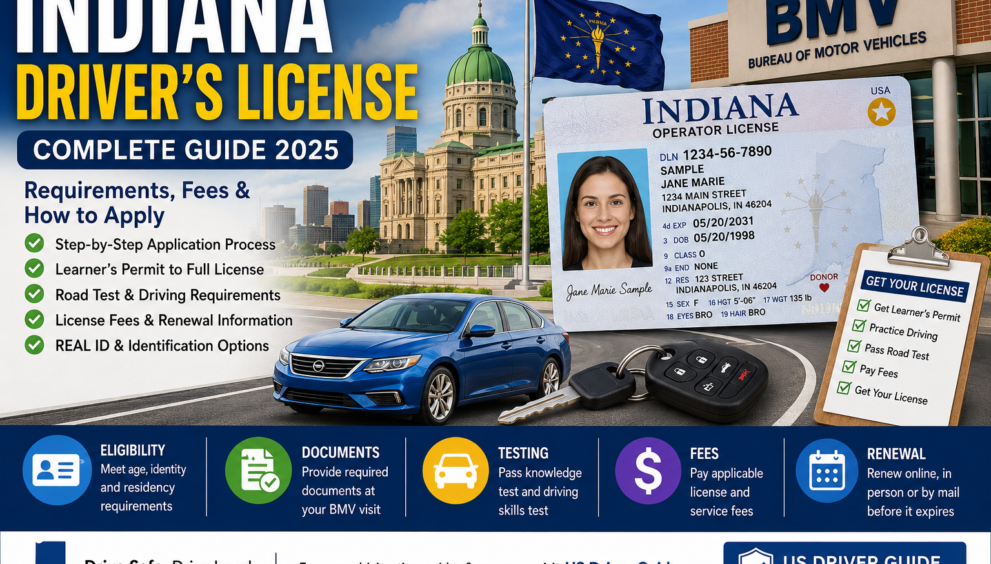
Obtaining an Indiana driver’s license is an important milestone that gives residents the freedom to drive legally and independently throughout the state. Whether you’re a first-time driver, a teenager applying for a learner permit, a new Indiana resident, or someone renewing an existing license, understanding the process can help you avoid delays and complete your application successfully.
The Indiana Bureau of Motor Vehicles (BMV) is responsible for issuing driver’s licenses, learner permits, identification cards, and vehicle-related credentials. This guide explains everything you need to know about obtaining an Indiana license, including eligibility requirements, required documents, testing procedures, fees, and renewal options.
What Is an Indiana Driver’s License?
An Indiana driver’s license is an official government-issued document that allows eligible residents to operate motor vehicles legally within Indiana and throughout the United States.
In addition to driving privileges, a driver’s license is commonly used for:
- Personal identification
- Employment verification
- Banking services
- Domestic travel
- Government transactions
For many residents, it serves as one of their most important forms of identification.
Types of Indiana Driver’s Licenses
Indiana offers several license classes depending on the type of vehicle being operated.
Operator’s License
The standard operator’s license allows drivers to operate:
- Passenger vehicles
- SUVs
- Pickup trucks
- Vans
This is the most common license held by Indiana drivers.
Motorcycle License
Drivers who wish to operate motorcycles must obtain motorcycle endorsements or licenses as required by Indiana law.
Commercial Driver’s License (CDL)
Commercial licenses are required for operating:
- Large trucks
- School buses
- Commercial passenger vehicles
- Tractor-trailers
Additional testing and medical certifications may apply.
Indiana Driver’s License Requirements
Applicants must meet several requirements before receiving driving privileges.
Minimum Age Requirements
Indiana generally allows:
- Learner’s Permit: Beginning at age 15 (with approved driver education)
- Driver’s License: Based on Indiana BMV eligibility requirements
Proof of Identity
Applicants must provide documentation proving:
- Identity
- Date of birth
- Legal presence
- Social Security status
Proof of Residency
Indiana residents must provide documentation showing their residential address.
Examples include:
- Utility bills
- Bank statements
- Lease agreements
- Government correspondence
Vision Screening
Applicants must pass a vision screening before receiving an Indiana license.
How to Get an Indiana Driver’s License
Step 1: Obtain a Learner’s Permit
First-time drivers typically begin by applying for a learner’s permit.
Requirements may include:
- Passing a knowledge test
- Passing a vision exam
- Providing required documents
- Paying applicable fees
Step 2: Practice Driving
Permit holders must gain supervised driving experience before becoming eligible for a driver’s license.
Young drivers may also need to complete driver education requirements.
Step 3: Pass the Driving Skills Test
Applicants may be required to complete a driving skills test that evaluates:
- Vehicle control
- Parking ability
- Traffic law compliance
- Defensive driving techniques
- Safe driving habits
Step 4: Receive Your License
After meeting all requirements, applicants receive their Indiana driver’s license.
Documents Required for an Indiana License
When visiting the Indiana BMV, applicants should bring:
- Proof of identity
- Social Security documentation
- Proof of Indiana residency
- Date of birth verification
- Legal status documentation (if required)
Ensuring all documents are valid and current can help prevent application delays.
Indiana Driver’s License Fees
License fees vary depending on:
- Age
- License type
- Endorsements
- Renewal status
Additional charges may apply for:
- Duplicate licenses
- Learner permits
- REAL ID credentials
- Commercial licenses
Applicants should verify current fees before applying.
Indiana REAL ID
Indiana offers REAL ID-compliant driver’s licenses that meet federal identification requirements.
Benefits of a REAL ID include:
- Domestic air travel
- Access to federal facilities
- Enhanced identity verification
Many residents choose REAL ID because of its wider acceptance.
Indiana Driver’s License Renewal
Drivers must renew their licenses periodically to maintain valid driving privileges.
Renewal options may include:
- Online renewal
- In-person renewal
- Self-service kiosks (where available)
Keeping personal information current with the BMV helps ensure timely renewal reminders.
Common Mistakes to Avoid
Many applicants experience delays because of:
- Missing documents
- Incorrect application information
- Expired identification
- Failing vision requirements
- Incomplete residency documentation
Reviewing requirements beforehand can help simplify the process.
Helpful Resources for Indiana Drivers
Understanding Indiana licensing rules, permit requirements, driving tests, and renewal procedures can sometimes feel overwhelming. In addition to official BMV resources, many drivers use US Driver Guide to access educational driving content, licensing information, road safety tips, and practical guidance that helps simplify the licensing process.
Frequently Asked Questions
How long does it take to get an Indiana driver’s license?
Processing times vary, but applicants typically receive their permanent license after completing all requirements and verification procedures.
Can I renew my Indiana driver’s license online?
Many eligible Indiana drivers can renew online through approved BMV services.
What documents are required for an Indiana driver’s license?
Applicants generally need proof of identity, residency, Social Security status, and other required documentation.
Is a REAL ID required in Indiana?
A REAL ID is not required for driving but is recommended for domestic air travel and access to certain federal facilities.
What happens if my Indiana driver’s license expires?
Driving with an expired license may result in fines or penalties. Drivers should renew before the expiration date whenever possible.
Final Thoughts
Obtaining an Indiana driver’s license becomes much easier when you understand the requirements and prepare the necessary documents in advance. Whether you’re applying for your first permit, taking a driving test, upgrading to a REAL ID, or renewing an existing license, proper preparation can help ensure a smooth experience.
For additional driving resources, licensing guides, road safety information, and helpful educational content, many motorists rely on US Driver Guide as a trusted source for navigating Indiana licensing requirements and becoming safer, more informed drivers.