







Dissertation vs Thesis: A Complete Guide for Students

Most students get to their thesis or dissertation stage already unsure about one basic thing: which one they’re actually writing, and what that means for how they should approach it. The words get used all the time interchangeably, in handbooks, in conversations with advisors, sometimes even in official program documents. That overlap is where the confusion starts.
The two are related but not the same, and the difference goes beyond just the name. They have different purposes, different structures, and different expectations depending on your academic level and institution. Knowing which one you’re dealing with and what it actually requires shapes everything from how you plan your research to how you write each chapter.
This guide covers the practical distinction between a thesis and a dissertation: what each one is, how the writing process differs, and what to keep in mind as you work through either one.
Let’s Understand The Actual Meaning Of Thesis & Dissertation
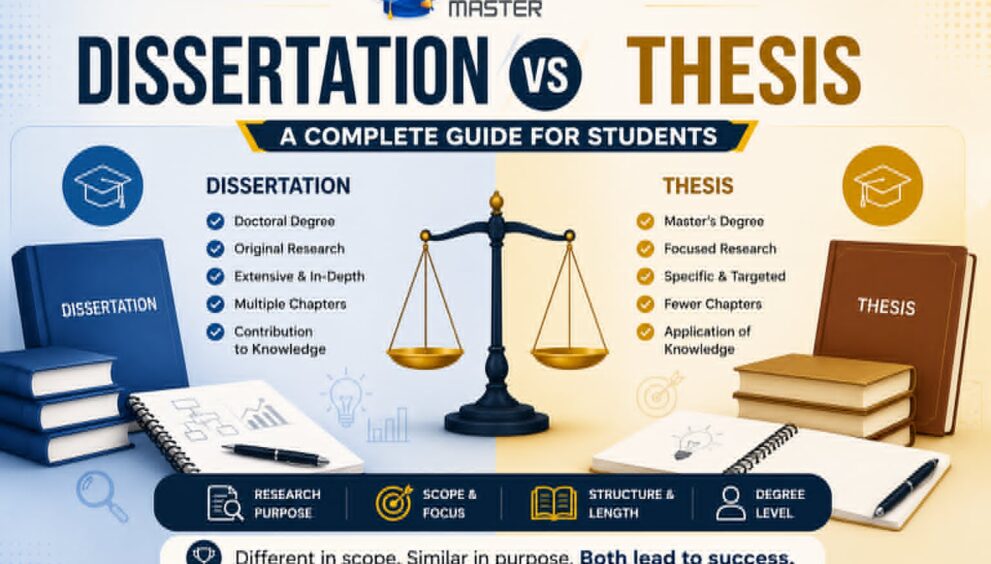
A thesis is a research-based document in which you build and defend an original argument using existing literature. It shows you can engage critically with your field and form a well-supported position. Most Master’s programs require a thesis as the final academic milestone.
A dissertation is a larger, more independent piece of work where you’re expected to generate new knowledge through original data collection, fieldwork, or primary analysis. This is typically what PhD candidates produce, with significantly higher expectations around scope and contribution.
Why the Terms Get Confusing
In the US, this distinction is fairly standard. But in the UK and parts of Europe, the terminology is reversed: what Americans call a thesis, British universities often call a dissertation, and vice versa. Some institutions also use both terms loosely regardless of level, which adds to the confusion.
Always check your program’s specific requirements rather than relying on the general definition alone.
What “Do My Dissertation” Really Means
When someone searches for ‘do my dissertation‘ at 2 am, they’re usually not looking for someone to write it entirely; they want a way out of the stuck feeling. That’s a very different thing.
What most students actually need at that point is structure, a clearer timeline, and someone with experience to look at where things have gone wrong. The work is theirs. They just need help getting it moving again.
If you’re at that stage, here’s what’s worth looking for in academic support:
· Subject expertise: Someone familiar with your field, not just academic writing in general
· Confidentiality: Your work and your details stay private
· Revision support: The ability to go back and forth until the output actually works for you
Getting help with a dissertation doesn’t mean stepping away from it. It usually means getting close enough to it again to finish it properly.
Thesis vs Dissertation – A Proper Comparison
Both documents follow a similar path on paper, but the expectations, scope, and demands behind each one are quite different. Here’s a clear breakdown of where they actually diverge.
| Thesis | Dissertation | |
| Academic Level | Master’s | PhD |
| Length | 15,000–50,000 words | 60,000–100,000+ words |
| Research Type | Synthesizes existing sources | Generates original knowledge |
| Timeline | One academic year | Two to four years |
| Supervision | One primary supervisor | Supervisory committee |
| Outcome | Demonstrates subject mastery | Contributes to the field |
The difference in length and timeline alone tells you why the two require completely different levels of planning. A dissertation isn’t just a longer thesis. It’s a different type of academic work entirely.
How the Writing Process Actually Works for Each
Both follow the same basic structure: introduction, literature review, methodology, findings, and conclusion. But the weight of each chapter shifts depending on which one you’re writing.
Thesis
· Literature review is the heaviest section your argument is built on existing research.
· Methodology is lighter, focused on how you analyzed sources rather than the original research design.
Dissertation
· Methodology and findings carry the most weight
· Reviewers scrutinize the methodology closely. Your findings depend on how sound your research design
· Writing is more iterative. Drafts go back and forth with your committee multiple times.
One practical tip that applies to both: finalize your research question before you write anything else. Everything else builds from there.
Common Mistakes Students Make With Both
These come up more often than most students expect.
Treating Both as Structurally Identical
A thesis and a dissertation differ in what each chapter is supposed to do, not just in length. Applying the same structure to both usually shows in the final result.
Writing the Lit Review Too Early
If your research question shifts after several thousand words of lit review, most of it becomes unusable. Lock the question in first.
Underestimating the Methodology Chapter
In a dissertation, methodology is what makes your findings credible. Treating it as a formality is one of the more costly mistakes you can make.
Leaving Citations for the End
Fixing inconsistent references across 80,000 words in the final week is avoidable. Build good habits from chapter one.
Not Accounting for Revision Cycles
First drafts don’t get submitted. Factor in feedback turnaround time from the start. Supervisors don’t always respond quickly.
When You Need Outside Help
A thesis or dissertation doesn’t happen in isolation. Most students are managing coursework, part-time work, or personal responsibilities alongside it and at some point, the workload catches up. That’s not a personal failure; it’s just the reality of what these projects demand.
Many students start looking into thesis writing services at this stage not to hand off their work, but to get structured support with editing, formatting, or research direction. That kind of help is more common than people admit.
What legitimate academic support looks like:
· Editing and proofreading to keep your drafts clear, structured, and well-written
· Research guidance to help narrow your question or map out your methodology
· Formatting support to meet your institution’s specific submission requirements
· Draft feedback that gives you structured input to revise more effectively
The goal of any good support service is to make you more capable of finishing your work, not to replace your thinking.
FAQs
Is a thesis harder than a dissertation?
Not necessarily harder, but a dissertation is more demanding in scope. It requires original research, a longer timeline, and multiple rounds of committee review, which makes it a bigger undertaking overall.
Can I use thesis and dissertation interchangeably?
In casual conversation, yes but academically, no. The terms have distinct meanings depending on your academic level and country. Always check what your program specifically requires.
How long does it take to write a dissertation?
Most PhD dissertations take between two and four years from start to submission. The timeline includes research design, data collection, writing, and multiple revision cycles, not just the writing phase alone.
Conclusion
A thesis and a dissertation serve different academic purposes, require different research approaches, and demand different things from you at every stage of the writing process. Treating them as the same document is where most students lose ground early.
Before you write a single word, get clear on what your program actually requires, not just the name of the document, but the expected scope, structure, and submission standards. That clarity alone will save you from a significant amount of rework later. Both are demanding pieces of work, but they become far more manageable once you know exactly what you’re dealing with.
Read More