







Artificial Intelligence: Transforming the Future of Technology and Innovation

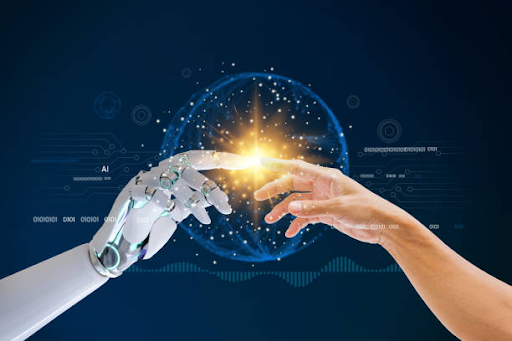
Artificial Intelligence is a subdivision of computer science that deals with the development of systems that replicate the functionality normally done by human intelligence. These activities are experience learning, language learning, pattern recognition, and decision-making. Artificial intelligence does not remain on the academic research stage. But it is also a practical technology that affects the way individuals communicate with the digital world. Its increasing popularity in all industries demonstrates its significance in modern innovation and technological advancement.
Historical background of Artificial Intelligence.
Artificial intelligence is an idea that can be traced to the 1950s when scholars began raising doubts on whether computers could think just like humans. The initial AI systems were based on symbolic reasoning and preset rules, which restricted their flexibility. With time, new techniques became possible due to the increased computational capability and the availability of data. With the introduction of machine learning, a turning point was made because the systems were able to learn using data. In the current times, artificial intelligence is constantly advancing with deep learning and sophisticated algorithms, which are capable of solving complex and large-scale problems.
Best Technologies driving Artificial Intelligence.
The artificial intelligence is supported by a few technologies which are interrelated and allow intelligent behavior. Machine learning enables the systems to discover patterns and enhance precision without explicit programming. Deep learning improves this ability through the application of neural networks that replicate the workings of the human brain. NLP is a software development technique that allows machines to interpret and produce human language to enable communication with technology to be more familiar. AI applications can use computer vision to process visual data, and examples may be facial recognition and image analysis.
Business Operations with Artificial Intelligence.
Artificial intelligence is being embraced by businesses worldwide as a way of enhancing efficiency and decision-making. AI-based tools can be utilized to process large volumes of data and determine trends, predict results and streamline operations. Artificial intelligence helps to detect fraud, evaluate credit, and risk in finance. In marketing, it allows creating a personal customer experience with the help of data-driven insights. Artificial intelligence can assist organizations to lower costs and improve their performance by automating routine work and improving analytical services.
Effects of Artificial Intelligence in Healthcare.
The field of health has been greatly affected by artificial intelligence that has improved diagnosis, treatment, and care of patients. Using AI systems, medical images and laboratory results, and patient records are analyzed to assist clinical decisions. Predictive models are useful in determining the health risk factors and enhancing early detection of the diseases. There is also the use of artificial intelligence in the discovery of drugs, as well as the development of personalized treatment programs. Such innovations lead to greater efficiency, precision and results in health care services.
Artificial Intelligence in Everyday Life.
Artificial intelligence is the aspect that is integrated in our daily life through different digital tools and services without much hard work. Virtual assistants answer the voice and control everyday activities. Recommendation engines are used to recommend services, products and content according to the behavior of users. AI is used to ensure that navigation systems give the correct route and traffic data. These applications show that artificial intelligence can be used to make the experience more convenient, personalized, and enjoyable on a variety of platforms.
Ethical Problems and Responsible AI.
Ethical issues have been viewed as more of the focus with the increased power of artificial intelligence. The problem of data privacy, security, and algorithmic bias is rather serious. AI might replicate the biases found in training data, and thus will come up with unfair or inaccurate results. It is also feared that there is lack of transparency and accountability in automated making of decisions. To develop artificial intelligence ethically and through regulation, there should be a sense of fairness and inclusivity.
Artificial Intelligence Future Trends.
The future of artificial intelligence is characterized by constant innovation and the rapid expansion of its applications across the tech universe. Explainable AI aims to introduce greater transparency and clarity in intelligent systems, enabling users to understand how decisions are made and fostering trust in AI-driven technologies. Human-oriented AI emphasizes collaboration between machines and human beings rather than replacement, focusing on enhancing human capabilities and productivity.
As emerging technologies continue to evolve within the broader tech universe, artificial intelligence will play a vital role in driving automation, improving decision-making, and supporting sustainable development. These advancements will enable organizations to optimize resources, reduce inefficiencies, and address complex global challenges more effectively. With the continuous development of artificial intelligence. Its influence on education, the workforce, and industries worldwide will continue to grow, reshaping how people learn, work, and innovate in an increasingly interconnected digital ecosystem.
Conclusion
Artificial intelligence is now a disruptive technology that is pushing technology forward in various industries. AI will still transform the functioning of systems and human interactions in business and healthcare as well as in our daily digital lives. Although ethical and governance-related issues will be present, an ethical and careful approach could achieve the most benefits of artificial intelligence. With the continued growth of innovation, AI will continue to be one of the foundations of digital transformation and future evolution.