








Top 7 Indian Clothes for Weddings and Festive Celebrations

Particularly on weddings and other joyful events, traditional Indian attire is a kaleidoscopic mirror of Indian civilisation. These say volumes about ancestry, workmanship, and significance; they are not only garments. From the exquisite drapes of a silk sari to the exquisite needlework on a bridal lehenga, every item has a tale to be shared regarding local craftsmen and eternal elegance. The decision of clothing is highly taken into account for respect for conventions and the significance of an event, as well as for individual style. Unrivalled ease comes for those who would embrace this kind of exquisite sartorial heritage in the digital era. Through a respected Asian Clothes Online store, you can quickly browse collections for a stunning variety of genuine and avant-garde patterns delivered to your door. Indian fashion’s grandeur is thereby brought to your doorstep.
The adaptable Anarkali Suit
Traditional elegance and contemporary panache come together wonderfully in the Anarkali suit. So called after the legendary courtesan, this ensemble is made up of a frock-style long kurta with a fitted bodice and flared skirt, a slim-fit churidar trouser beneath, and a dupatta. Its graceful shape appeals to several body types. Festive events and sangeet celebrations love it. Anarkalis span basic, printed patterns worn at daytime events to exceedingly heavy embroidered ones often reaching the ground for evening celebrations. When one dances, that dramatic flare gives elegance and freedom of motion to create a stunning effect.
The Statement-Making Sharara
Sharara gives the wearer an air of distinction and style, especially at the Muslim wedding when a bride or a bridegroom is attired in this or at any other celebration occasion like mehndi. A sharara forms three pieces: a cropped or mid-thigh length kurta, a pair of wide, flared trousers which fall at the knee, known as sharara, and a dupatta. What differentiates it from the rest is the volume in the trousers; essentially, heavy embellishments along the seams. It silhouettes into an amazing blend of elegance and playfulness. That particular attire gives ample opportunity for interesting craftsmanship on the trousers, making it a statement in fashion with a deep-rooted cultural attachment.
The Stylish Bandhgala Jacket
Men seeking something as urbane yet less formal than the sherwani would find an outstanding choice in the Bandhgala or Jodhpuri jacket. Originally a customised, closed-neck garment from the royal courts, it says volumes in silent confidence. Usually elevated with subtle embroidery or brilliant buttons, the structured fit and simple elegance make it ideal for cocktail parties, engagement celebrations, or morning wedding events to be constructed from suiting fabric, silk, or jacquard and worn over a kurta or a basic western-style shirt. With unmatched grace, it unites conventional Indian and current formal attire.
Panetar Sari’s Bold Colours
Inclusive of vivid red bandhani dots and a delicately woven zari border, this is a classic white or off-white sari, extremely significant to every bride, above all in Gujarati weddings. The minimalism of the base colour sharply contrasts with the boldness of the crimson dots and the gold chain representing purity, prosperity, and married life. Normally given to the bride by her mother’s family, it is worn during the wedding ceremony until she changes into her Gharchola sari. Because of its distinctive colour mix, this is a very culturally sensitive attire.
The Regal Lehenga Choli
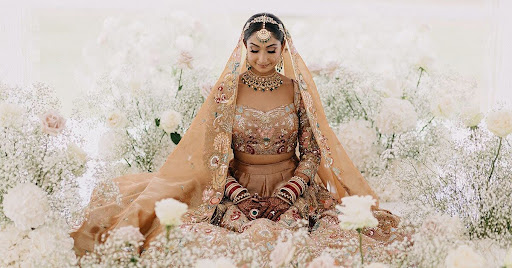
Because of its grandeur and royal elegance, a lehenga choli is always the preferred choice for weddings among visitors and brides. This three-piece outfit comprises a flared skirt known as a lehenga, a fitted top, usually termed as a choli, and an exquisite scarf called a dupatta. Strong zari work, intricate zardozi embroidery, little mirroring, and a rich usage of stones define bridal lehengas mostly as works of art. Most likely with vivid bandhani patterns or rich brocades, the celebratory one will.. With its huge form enabling amazing movement, it is perfect for ceremonial marches and dancing. Its stylistic adaptability guarantees its attractiveness for every most auspicious occasion, from conventional Mughal-inspired designs to modern pastels.
Following the Panetar
The bride wears a Gharchola saree at a Gujarati wedding. Usually, this is a crimson bandhani saree with a square woven pattern using zari thread and little symbols like an elephant or a parrot, which are thought to be lucky and symbolic of love. Normally offered by the bride’s family, the Gharchola represents the bride embracing her new position and marriage home membership. Although the sophisticated design depicts tremendous ability and craftsmanship, the deep crimson colour stands for marriage and fertility; this collection is both very symbolic and amazing.
Conclusion
Every garment honours different ways tradition may be celebrated and personal style may be shown, from the brilliance of the lehenga and sherwani to the symbolic elegance of the Panetar and the contemporary charm of the Anarkali. Once the value and beauty of each ensemble are recognised, a deeper appreciation of the rich cultural stories baked into each fabric begins to surface, and every event becomes a memory trip.