








How Truck and Drive Works in Modern Freight Transportation

Anyone who’s spent time around a distribution yard has probably heard drivers throw around terms like “drop and hook” or “live load” without a second thought. But there’s another method that doesn’t get talked about as much outside the industry, even though it’s one of the most common ways freight actually moves: truck and drive, sometimes called pick and drive.
If you’re new to logistics, or you’re just trying to understand why your shipment moves the way it does, this one’s worth breaking down. It sounds simple on paper, and honestly, it mostly is. But the way it’s used has changed a fair amount as freight networks have gotten more spread out and time-sensitive.
What Truck and Drive Actually Means?
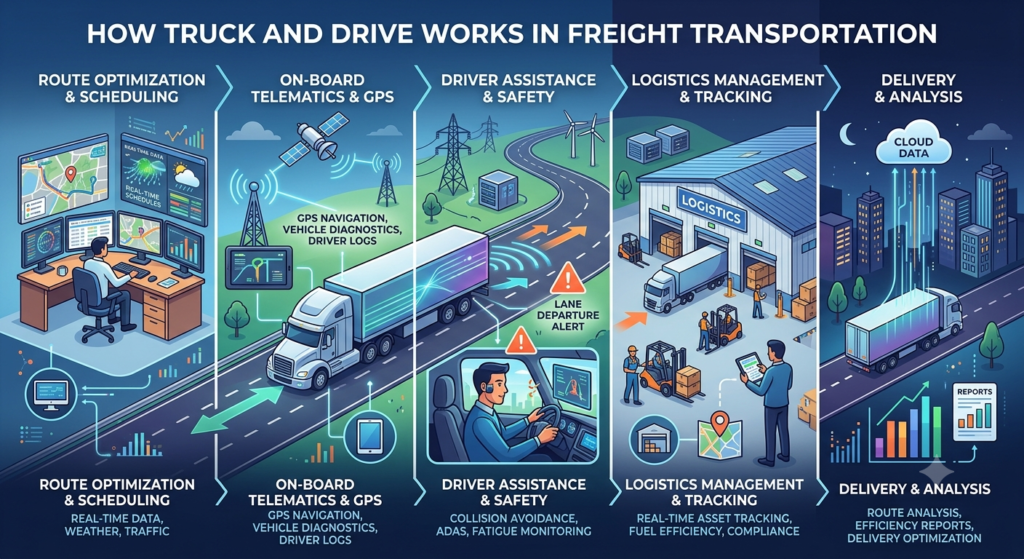
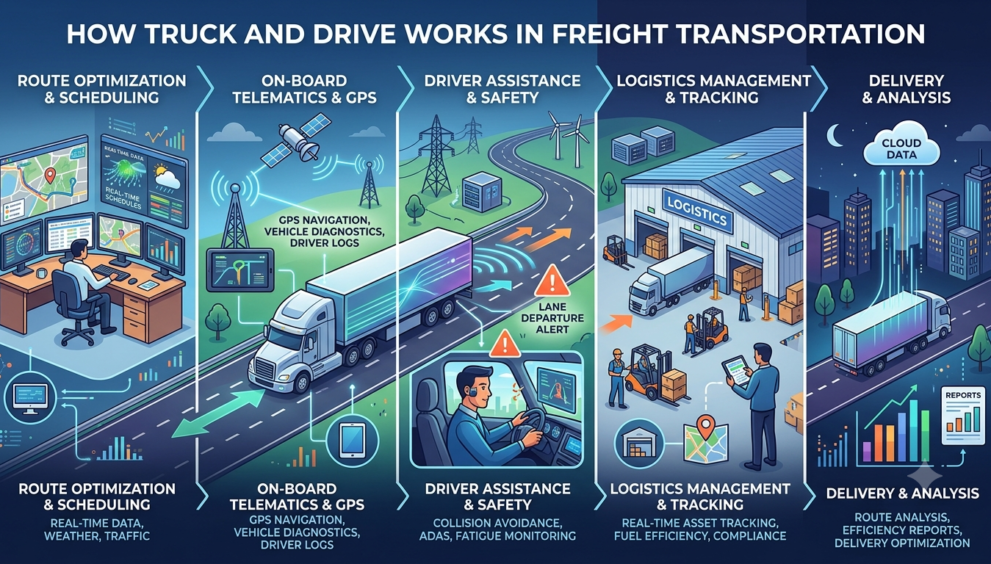
At its core, truck and drive is exactly what it sounds like. A driver picks up a loaded trailer, hooks it to their truck, and drives it directly to the destination no swapping trailers partway through, no drop yards in between unless something forces a change of plan.
This is different from drop and hook, where a driver drops an empty trailer at a location and picks up a different one that’s already loaded and waiting. With truck n drive, the same trailer stays with the same truck for the whole trip. One driver, one trailer, start to finish.
It sounds almost too basic to have its own name, but in an industry built around efficiency and trailer pooling, doing things the “simple” way is actually a deliberate choice, not a default.
Why Companies Still Use This Method
You’d think drop and hook would win out every time since it keeps trucks moving without waiting on loading and unloading. But pick and drive still holds up in a lot of situations, and there are real reasons for that.
Fewer trailers to manage. Drop and hook only works well if a company has enough trailers sitting around at the right locations. Smaller carriers, or ones running less predictable routes, often don’t have that luxury. Truck and drive keeps things simpler because there’s no trailer pool to coordinate.
Better for time-sensitive freight. When a shipment has a tight window perishable goods, medical supplies, anything where a delay actually matters having one driver carry it the whole way cuts out the handoff risk. Nobody’s waiting on a trailer swap that gets pushed back an hour because the yard’s backed up.
Easier tracking and accountability. One driver, one trailer, one trip. If something happens to the load, there’s no ambiguity about which leg of the journey it happened on. That matters more than people expect, especially for high-value freight.
Where It Fits in a Modern Freight Network
Freight networks today are a mix of both methods, and most large carriers switch between them depending on the route and the customer. Long-haul routes between major distribution hubs often lean on drop and hook because the volume supports having trailers pre-staged. Regional or shorter routes, especially ones without a heavy trailer pool nearby, tend to lean on truck and drive instead.
There’s also a cost side to this. Drop and hook requires extra trailers just sitting around, which isn’t free. A company has to own or lease more equipment than it’s actively using at any given moment. Pick and drive avoids that overhead, which is part of why smaller and mid-size carriers often prefer it even when it means the truck itself is tied up longer per trip.
The Driver Experience Is Different Too
This isn’t just a back-office logistics decision it changes what the actual driving job looks like. Drivers running truck and drive routes tend to have more predictable schedules since they’re not waiting around at drop yards for a trailer swap. They load, they drive, they deliver, and the trip has a clear beginning and end.
Some drivers actually prefer this. There’s less coordination involved, fewer moving parts that can go wrong outside their control, and it tends to feel more like a straightforward point-A-to-point-B job rather than juggling trailer logistics along the way.
What This Means for Shippers
If you’re shipping freight and trying to decide which method fits your needs, it usually comes down to a few questions:
- Is the shipment time-sensitive enough that a trailer swap adds real risk?
- Do you need a dedicated driver on the load the whole way for tracking or liability reasons?
- Is your freight moving through a region where drop yards and trailer pools aren’t well established?
If the answer to any of those is yes, pick and drive is probably the better fit. For high-volume, predictable routes between major hubs, drop and hook still tends to win on raw efficiency.
Final Thoughts
Truck and drive isn’t a flashy or complicated concept, but it’s one of the quiet backbones of how freight actually moves day to day. It trades some of the speed advantages of drop and hook for simplicity, accountability, and fewer moving parts and for a lot of carriers and shippers, that trade-off is exactly what they need.
As freight networks keep adjusting to tighter delivery windows and less predictable demand, don’t expect pick and drive to disappear anytime soon. If anything, it’s likely to stay just as common as it’s always been, even as the rest of the industry keeps changing around it.