






How many cups is 200 ml? A clear breakdown

Two hundred milliliters is a common volume in recipes, product labels, and beverage containers, yet converting it into cups isn’t always as straightforward as it seems. The answer changes slightly depending on which measurement standard is being used, which can lead to confusion when following recipes from different regions.
This breakdown covers the exact conversion, explains why the number shifts depending on the cup standard, and offers practical ways to measure 200 ml accurately at home.
The basic conversion: 200 ml in cups
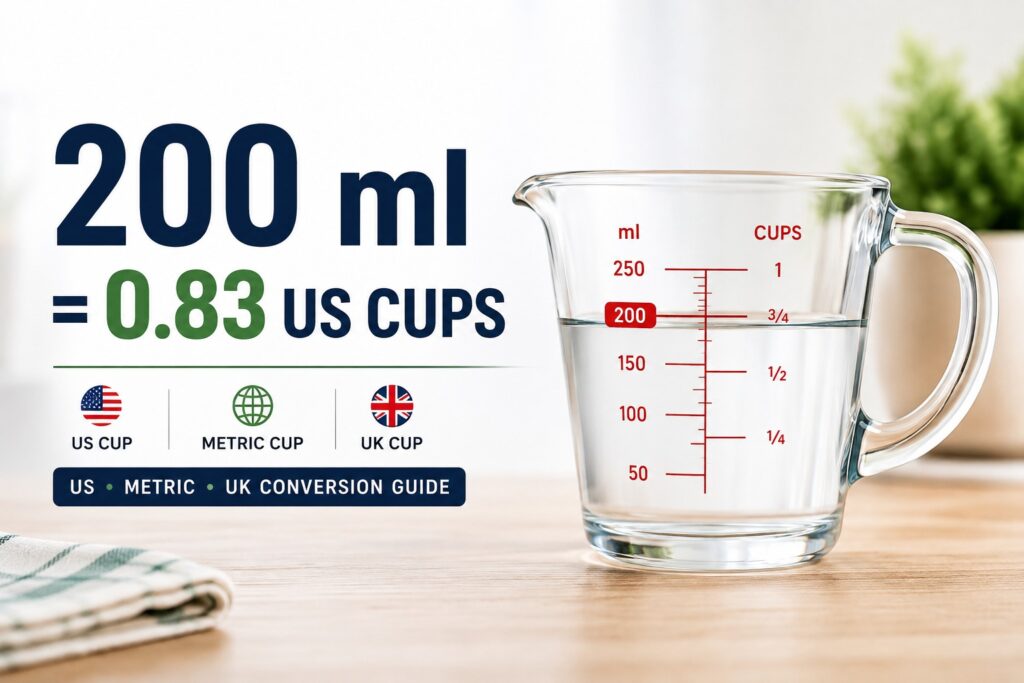
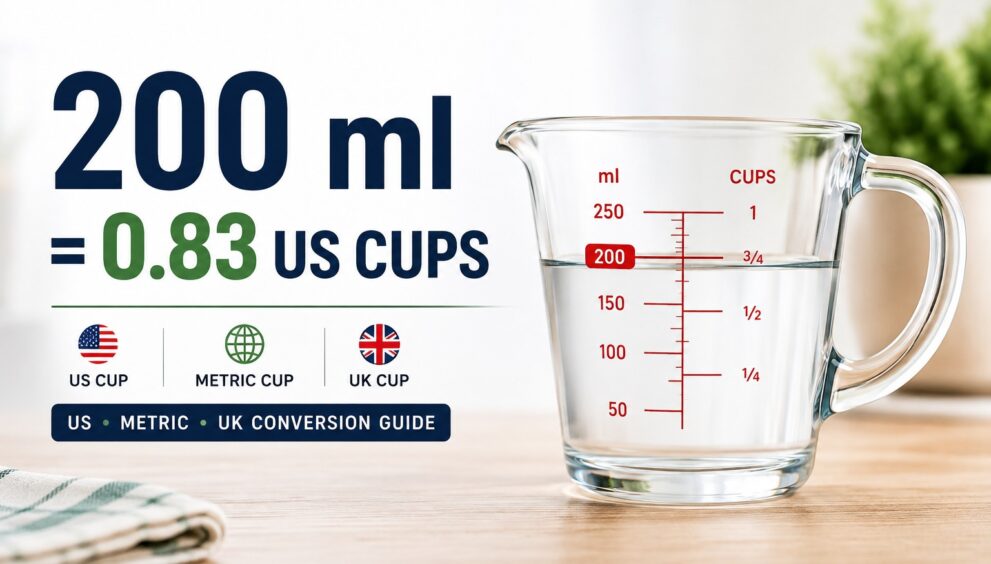
Using the US customary cup, where one cup equals 240 ml, 200 ml converts to approximately 0.83 cups, or just under seven-eighths of a cup.
This is the figure most useful for anyone in the US following a recipe or product label that lists a measurement in milliliters rather than cups.
Why the answer isn’t always the same
The US cup versus the metric cup
Not every country defines a cup the same way. The US customary cup is set at 240 ml, while the metric cup, used in countries like Australia and New Zealand, is defined as exactly 250 ml. Using the metric standard, 200 ml converts to 0.8 cups instead of 0.83.
The difference is small, but it can matter in recipes where exact ratios affect the final result, particularly in baking.
The UK imperial cup
The UK’s older imperial cup measurement, at 284.13 ml, is rarely used today, since UK recipes have largely moved toward metric measurements like milliliters and liters instead of relying on cup measurements at all.
Quick reference: 200 ml across cup standards
| Measurement Standard | Cup Size | 200 ml Equivalent |
|---|---|---|
| US customary cup | 240 ml | ≈ 0.83 cup |
| Metric cup | 250 ml | 0.8 cup |
| UK imperial cup | 284.13 ml | ≈ 0.70 cup |
Common items close to 200 ml
Understanding 200 ml becomes easier with a few familiar comparisons. A standard coffee mug typically holds close to 200 to 240 ml, while a small yogurt cup is often sold in sizes right around 200 ml. These everyday references can help estimate the volume even without a measuring tool on hand.
How to measure 200 ml accurately
Using a liquid measuring cup
Most US liquid measuring cups display milliliter markings alongside cup and ounce measurements, making it possible to measure 200 ml directly without needing to calculate the cup equivalent at all.
Using a kitchen scale
For ingredients where density varies, such as flour or shredded ingredients, a kitchen scale often provides more consistent results than a volume-based measuring cup, since weight remains constant regardless of how loosely or tightly an ingredient is packed.
Estimating without tools
In situations where a precise measuring tool isn’t available, remembering that 200 ml is just under a full US cup, or roughly seven-eighths, offers a reasonably close estimate for casual cooking purposes.
Why this conversion matters in everyday situations
Following international recipes
Many recipes from outside the US list ingredient amounts in milliliters, making it useful to know common conversions like 200 ml without needing to look them up every time.
Reading nutrition and beverage labels
Beverage containers and nutrition labels often list serving sizes in milliliters, particularly on imported products, so understanding roughly how much 200 ml represents in cups helps with portion awareness.
Meal prep and portioning
When preparing meals in batches, converting between milliliters and cups accurately helps maintain consistent portion sizes across multiple servings, especially when scaling a recipe up or down.
Avoiding common conversion mistakes
Mixing up cup standards
One of the most frequent errors is applying a US cup conversion to a recipe developed using the metric cup standard, or the reverse. Even a small mismatch like this can affect ingredient ratios in more sensitive recipes.
Rounding too early
When converting multiple ingredients within the same recipe, rounding each figure early can cause small errors to accumulate. Completing calculations with exact figures before rounding for practical measurement tends to produce more accurate results.
Where to double check this conversion
For quick reference, remembering that 200 ml equals how many cups generally comes out to just under 0.83 US cups makes it easier to convert similar volumes on the fly without needing a calculator every time.
Conclusion
Two hundred milliliters converts to approximately 0.83 US cups, or exactly 0.8 cups under the metric cup standard, with the small difference coming down to how each measurement system defines a cup. Understanding this conversion, along with a few everyday reference points, makes it easier to work confidently with recipes, beverage labels, and portion measurements regardless of which system they originally used. Keeping a quick reference chart nearby, or simply measuring directly in milliliters when possible, removes most of the guesswork from the process.