









10 Tips to Make Your Academic Writing Perfect

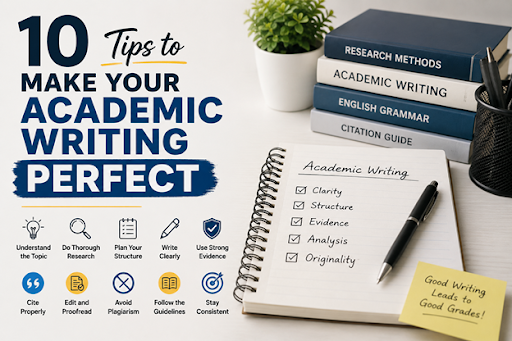
Writing assignments are an integral part of being a student, regardless of what level of education you are at. Academic writing helps give you a better understanding of the subject at hand and ensuring effective learning. It is crucial to follow a set structure and stay organized to write papers that score well. For scholarly papers, the writing process is not always easy, and many students fail to meet the requirements for assignments. Your instructors might be a bit too rigid with the requirements and not the most lenient with grading, either. The key to crafting an impeccable essay is a mix of in-depth research and creativity while adhering to set rules and limits. Here are 10 steps you can follow to make the process easier and outperform yourself each time!
10 Steps To Write A High-Quality Essay
1. Understand the Requirements
The foundational step in writing an effective paper is to make sure you have a clear understanding of the requirements. It may seem obvious, but many students tend to overlook important specifications. Knowing exactly what you are expected to write will give you a better idea of what to look for. This stage is going to help you in researching and structuring your essay accordingly. Pay attention to the question being asked, formatting requirements, deadline, referencing styles, and the length of the assignment. Keep these details in mind while writing so you do not have to make extra revisions in the end.
2. Research
The next step is to do extensive reading to gather relevant information on the subject matter of your essay. There is no limit to how much depth you should get into. It is the best way to have a better understanding of the topic. An in-depth research will provide you substantial amount of information to begin with. Make use of all the relevant sources you can access and take information that is important for your paper. This stage is going to ensure you have enough evidence to back up your arguments with, since you cannot make any claims without a credible source supporting them. Though this part of the writing process is the most time consuming, it is one of the most important ones. For graduate students working on a dissertation, this stage is especially critical. Many students choose to hire professional thesis writing services to ensure their dissertation is well-structured, properly researched, and meets all academic requirements from the start.
3. Create an Outline
Once you clearly understand the assignment requirements, the next step becomes easier: the structure. For most essays, the structure is similar, typically including an introduction, the main body, and a conclusion. For academic writing, it is important to follow a logical pattern to make an argument effectively. Having a defined structure is going to ensure a smooth writing process. Keeping an outline in mind is also going to make it easier for you to stick to the main idea and not add any unnecessary points.
4. Read and Take Notes
If your field requires you to consult multiple primary and secondary texts, make sure to read them with a set purpose in mind. Take notes as you go about the reading process. Read strategically, make sure the sources you are consulting are relevant to your paper, and whether it will be worth your time to read it whole. Not all the sources you come across will be important for your assignment. This is going to help in saving up time and energy to invest in the later stages of the writing process.
5. First Draft
Once you have a detailed structure and relevant material, you can write the initial draft. This can be non-linear. You might begin with the body paragraphs instead of the introduction, since it is supposed to contain the information you are going to present throughout the paper. This stage will allow you to brainstorm further. Make sure to keep your easy outline in mind so you don’t go off topic while writing. This draft is going to be the starting point for your assignment; you can further refine it by making changes as you proceed to read more.
6. Start With a Powerful Introduction
Your assignment’s opening sections should be a generic explanation of the subject matter but a concise and clear introduction of what you aim to achieve through the paper. This part of the text should effectively convey its purpose and its key arguments. This is going to build context for the rest of the writing. You may want to write this section after you are done writing the paper, so it explains the entire paper without missing any important points.
7. Cite Sources
Academic writing is not complete without referencing. Not only does it credit sources and authors, but it also showcases your research abilities. Citing sources is going to prove that you have done enough research and are using credible, reliable sources to support your claims.This also helps in avoiding plagiarism. Referencing and citation styles may vary according to the one specified by your instructor.
9. Proofread and Revise
Once you are done writing the paper, make sure to read it carefully and check for any mistakes that could lead to giving the reader a bad impression. Spelling and grammar mistakes are common; make sure you check the writing for mistakes. Pay attention to how the paragraphs are structured, and ensure transition paragraphs are coherent. Keep an eye out for sentences that seem out of place or distort the overall harmony of the paper. Many students leave this part for the last minute, which leads to them making mistakes. If you tend to do the same, consider seeking professional thesis binding and printing support to ensure your final submission meets university standards.
10. Ask for Feedback
Though it is difficult to have your work critiqued by others, it is necessary. As the writer, you might overlook mistakes and consider your paper to be flawless. However, it is not always the case, this is why asking peers your instructor for feedback is important. It can also give you valuable insights into new points of view and enhance the quality of your paper. Constructive criticism can also help you point out errors in your text and fix them. If you plan to take your research further, finding a reliable journal publication service near me can help you navigate the submission process and increase your chances of getting published.
Conclusion
It takes time and practice to master the art of writing a satisfactory essay. Even though it is a challenging task, with efficient planning and clear organization, you can write a paper that successfully meets all its requirements. With these 10 steps you can ensure your writing process is smooth and leaves you with enough time to make revisions before the deadline.